Praveen Vadla

Senior Digital Marketing Manager | August 04, 2026

How to Evaluate Loyalty Vendors on Adaptive Rewards, Precision Targeting, and Rewards Infrastructure

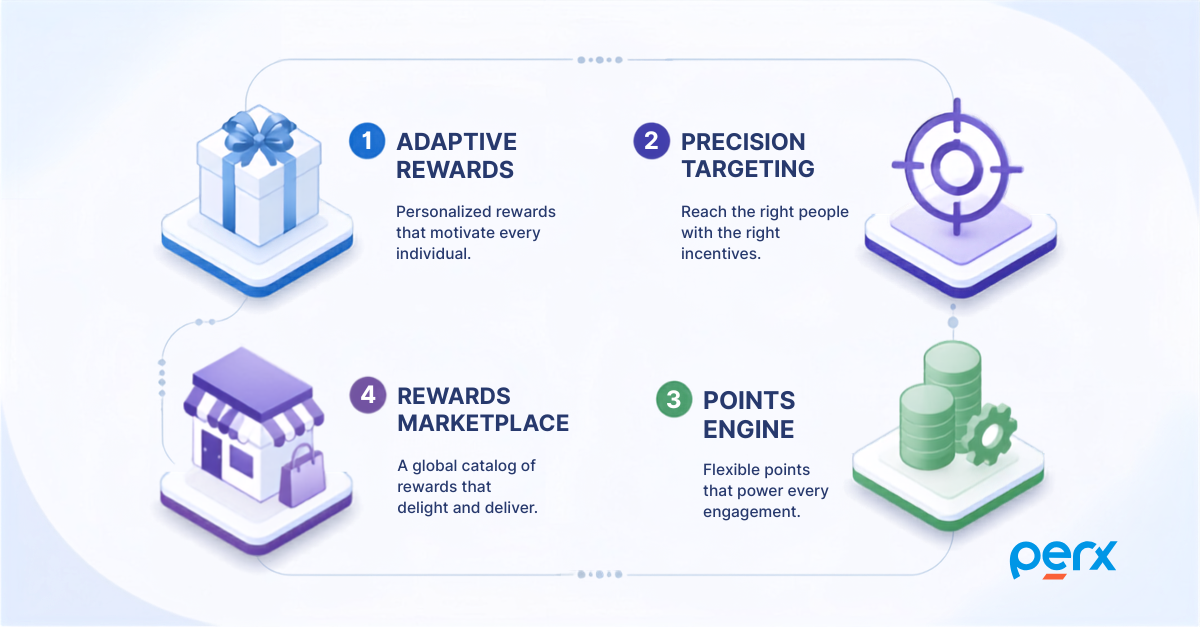
Evaluating loyalty vendors on adaptive rewards, precision targeting, and rewards infrastructure means looking past the size of a rewards catalogue and checking four things: whether rewards change based on individual customer behaviour, whether targeting rules can be configured at the individual transaction level, whether the points engine functions as a growth tool rather than a pure cost centre, and whether the rewards marketplace can operate as a single partner-management layer rather than a manually managed set of merchant deals. Most loyalty vendors offer some version of all four capabilities. The difference between a legacy points ledger and a modern behavioural loyalty platform shows up in how precisely and how quickly each capability can be configured to a specific customer action, and in whether the four work together as one system rather than four disconnected tools.

IN BRIEF

  • Evaluating a loyalty vendor on adaptive rewards, precision targeting, and rewards infrastructure means checking whether rewards vary per customer, whether targeting fires at the individual transaction level, whether the points engine is a growth tool rather than just a cost centre, and whether the rewards marketplace runs as one connected layer.
  • Adaptive rewards vary the incentive by an individual customer’s behaviour, value tier, or context, rather than applying one fixed offer to an entire customer base.
  • Precision targeting is a rules engine that fires a reward only when a defined transaction-level condition is met, unlike segment-level targeting, which applies one campaign to a broad group.
  • A points engine is a balance-sheet liability unless it is tied to a rules layer that connects point issuance to a specific, measurable behaviour rather than a flat accrual rate.
  • A rewards marketplace manages merchant partnerships and promotions in a single dashboard, determining how quickly a new partner or promotion can go live across every channel.
  • Each of the four capabilities maps to the Tactical, Operational, or Strategic mechanic layers used across banking, fintech, and insurance deployments, so evaluating them is really evaluating coverage across all three layers.
  • Vendors that satisfy all four capabilities generate the richest behavioural data set, the foundation for connecting these capability-level signals to a broader revenue-intelligence view.

What Are Adaptive Rewards?

Adaptive rewards are rewards that change based on an individual customer’s behaviour, value tier, or context, rather than a single fixed offer applied to an entire customer base. Where a traditional points programme gives every customer the same fixed earn rate, an adaptive rewards system might give a high-value but under-engaged customer a different incentive than a highly active customer who needs no additional push. The point of adaptive rewards is efficiency: the reward budget is spent on the customers and moments where it actually changes behaviour, rather than spread evenly across a base that includes customers who would have transacted anyway.

What Is Precision Targeting in a Loyalty Platform?

Precision targeting refers to a rules engine that fires a specific reward or campaign only when a defined set of customer conditions is met, such as a spend threshold in a specific merchant category, a dormancy period of a set length, or a combination of both. This differs from segment-level targeting, which applies a single campaign to a broad group, such as all customers of a value tier. A precision engine evaluates rules at the individual transaction level, which is why platforms built around it can report exactly how many rule triggers led to a specific spend outcome, rather than reporting a campaign-wide average.

What Is a Points Engine, and Why It Can Become a Cost Centre

A points engine is the underlying system that issues, tracks, and manages the redemption of loyalty points. On its own, a points engine is a liability on the balance sheet: points accrued but not yet redeemed represent a financial obligation, and a points programme with no attribution to specific business outcomes is difficult to defend to a CFO. The evaluation question is not whether a vendor has a points engine, since most do, but whether that points engine is connected to a rules and targeting layer that ties point issuance to a specific, measurable behaviour, turning it from a static ledger into an active growth lever.

What Is a Rewards Marketplace?

A rewards marketplace is the layer that manages merchant partnerships, promotions, and the catalogue of rewards a customer can redeem, in a single dashboard rather than a manually tracked set of individual merchant deals. For enterprises running loyalty programmes across multiple markets, the marketplace layer determines how quickly a new merchant partner or promotion can go live, and how consistently that promotion is presented across every channel, including in-app, web, and API-based experiences.

How These Capabilities Map to Behaviour Mechanics

Each of these four capabilities also maps to the Tactical, Operational, and Strategic mechanic layers used across banking, fintech, and insurance deployments. Adaptive rewards and a well-configured points engine typically power Tactical mechanics, since they determine what a customer earns the moment they transact. Precision targeting is what allows a Tactical mechanic to fire only for the right customer under the right condition, rather than being broadcast to an entire segment. A rewards marketplace becomes most valuable at the Operational and Strategic layers, where a customer is working toward a specific milestone or status and needs a wide, current catalogue of redemption options to stay motivated. Evaluating a vendor on these four capabilities is, in practice, evaluating whether they can support all three mechanic layers well, not just one.
Evaluation Checklist
Capability What to Ask the Vendor Business Outcome It Should Move Example in Practice
Adaptive Rewards Can rewards vary by individual customer value or behaviour, not just tier? Reward spend efficiency, CAC A dormant, high-value customer gets a stronger incentive than an already-active customer for the same action
Precision Targeting Can rules fire on individual transaction-level conditions? Campaign ROI, conversion A reward triggers only when a customer crosses a defined spend threshold in a specific merchant category
Points Engine Is point issuance tied to a specific tracked behaviour? CLTV, redemption liability Points are issued for a defined spend-rule trigger rather than a flat rate on every transaction
Rewards Marketplace Can a new merchant or promotion go live without an engineering request? Speed to market, partner breadth A new redemption partner is added to the catalogue within days of a commercial agreement
Most legacy loyalty vendors can answer yes to at least one of these four questions. Enterprise buyers evaluating a platform for a multi-year deployment should look for a vendor that can answer yes to all four in a single, integrated architecture, since a loyalty stack assembled from separate point solutions for rewards, targeting, and marketplace management tends to accumulate the same IT dependency and slow release cycles the loyalty programme was meant to solve in the first place.

From Capability Evaluation to Revenue Intelligence

Vendors that can answer yes to all four evaluation questions are also the ones generating the richest behavioural data set, since adaptive rewards, precision targeting, the points engine, and the rewards marketplace all produce a record of which specific customer, condition, and reward combination led to which outcome. That data set is the foundation for a broader shift already underway across engagement platforms: connecting these capability-level signals into a single view of which behaviours predict revenue, not just which campaign performed best. This is a natural fit for the next phase of the platform for any vendor with all four capabilities already integrated, since the data is already there.

FAQs:

What is the difference between adaptive rewards and a standard points programme?
A standard points programme applies the same earn rate to every customer. Adaptive rewards vary the incentive based on an individual customer’s behaviour, value, or context, so reward spend is directed at the customers and moments where it actually changes behaviour.
Segment-based marketing applies one campaign to a broad customer group. Precision targeting evaluates rules at the individual transaction level, firing a reward only when a specific, defined condition is met.
Because points accrued but not yet redeemed represent a financial liability, and a points programme with no connection to specific tracked behaviours is difficult to justify against a measurable business outcome.
Adaptive rewards and the points engine typically power Tactical mechanics, since they determine what a customer earns at the moment of a transaction. Precision targeting determines which customer and condition triggers that mechanic, and a rewards marketplace supports the redemption needs of longer Operational and Strategic mechanics.
Together, these four capabilities generate a record of which customer, condition, and reward combination produced which outcome. Connected across a customer base, that data can begin to show which behaviours are most predictive of revenue, which is the direction engagement platforms are increasingly building toward.

Praveen Vadla

Praveen Vadla is Senior Digital Marketing Manager at Perx Technologies. With over 10 years of experience in B2B SaaS marketing across the US and Southeast Asia, he focuses on customer loyalty, engagement, and retention strategy. He writes on how brands build lasting customer relationships in a mobile-first economy. Connect with Praveen on LinkedIn.

Recommended for you

Loyalty Engagement Platform Built for the Mobile-first Economy
Privacy Overview

This website uses cookies so that we can provide you with the best user experience possible. Cookie information is stored in your browser and performs functions such as recognising you when you return to our website and helping our team to understand which sections of the website you find most interesting and useful.